
Riding Osaka's Street Karts a Second Time: How Shinsaibashi and Dotonbori Change Between Weekends and Weekdays
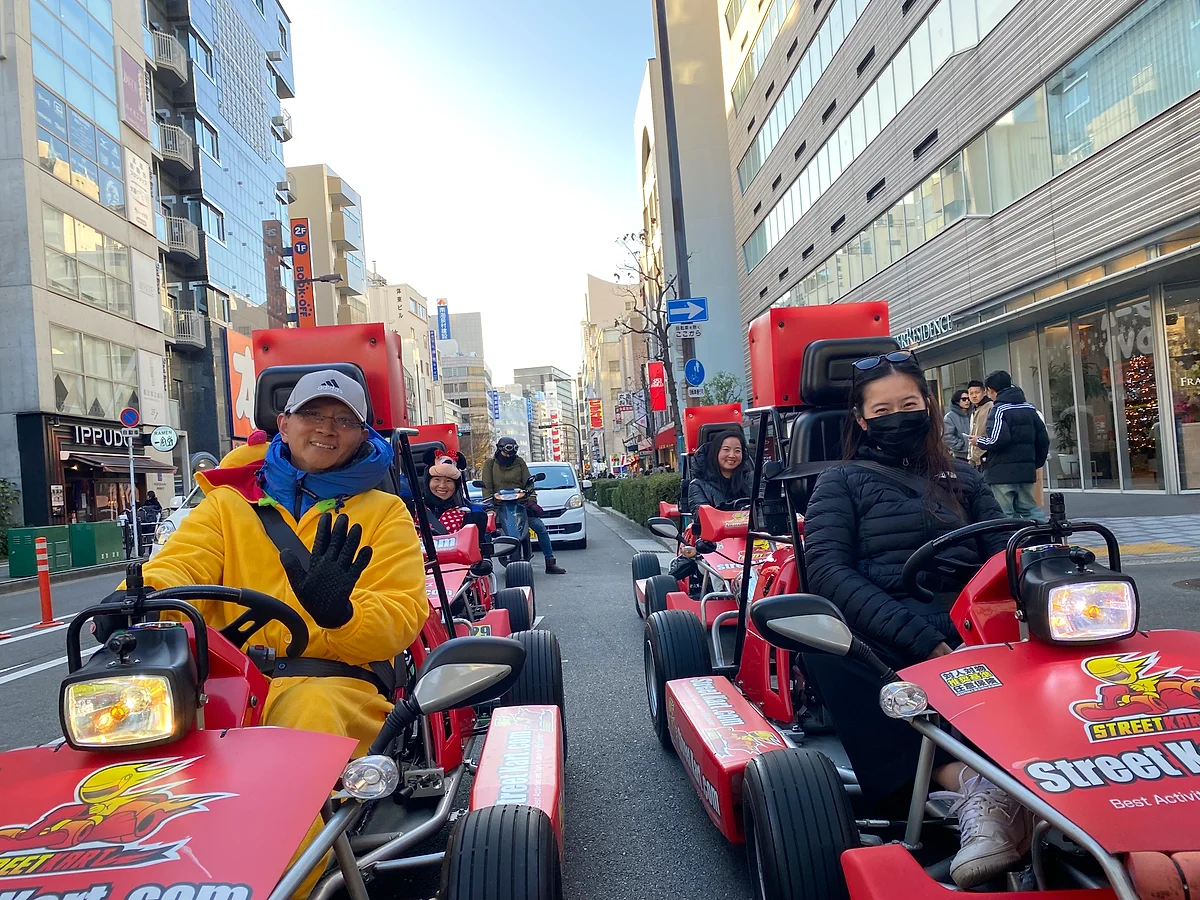
Riding Osaka's Street Karts a Second Time: How Shinsaibashi and Dotonbori Change Between Weekends and Weekdays
Do you remember your first ride?
It was your first time behind the wheel of a kart. Your first time driving on the left in Japan. Your first time following a guide through city traffic. Then suddenly it was over, and you barely remembered the colors of the neon or the sounds of the city. I think a lot of people have that experience.
If you're partway through your trip and wondering whether to ride again, I have a suggestion.
Try riding on a different kind of day than the first time.
The route through Osaka's Minami district is the same, but the crowds are different on weekends and weekdays. When the crowds change, so does what catches your eye. That's what makes it fun.
What to Watch the Second Time: How Busy the City Is
Let's be honest. On your first ride, you're too busy to notice much.
You're watching the distance to the kart ahead, the color of the traffic lights and the guide's hand signals. That's enough to fill your head, and that's fine.
The second time is different. Your body already knows the flow: where you start, where you stop and how fast the group moves. The focus you spent on all that frees up, and you start noticing what's around you.
So what should you look at with that extra attention? I recommend looking at how busy the city is.
On weekends, tourists and shoppers fill the streets at the same time, and the sound of the city gets thicker. On weekdays, the crowds calm down, and the buildings and signs come into sharper focus.
One thing up front: the differences I describe here aren't based on data. They're tendencies I've noticed walking around the city, and they can change with the season, the weather or whatever events are happening that day. Even so, paying attention to them makes a second ride a lot more fun.
On Weekends, Osaka's Minami District Has Its Own Beat
The Osaka shop is in Minami-Horie, a neighborhood popular with young people and full of stylish shops and cafés.
A short ride from the shop brings you into Amerikamura, or "America Village," the center of Osaka's street culture. Think rows of vintage clothing stores and young people hanging out around Triangle Park.
On weekends, Amerikamura feels like a festival at its liveliest. The sidewalks get noticeably more crowded. Music from shop speakers, laughter and the voices of people taking photos all blend into one big mix. Because you sit low in the kart, all that energy flows past at face level. It's a great feeling.
As you get close to Shinsaibashi, you'll see crowds heading toward the covered shopping arcade. On weekends, lots of people are carrying shopping bags, and the groups waiting at crosswalks tend to be bigger.
One tip for first-time visitors to Japan: when the pedestrian light turns green, everyone starts crossing at once. The karts stop and wait as the guide directs. There's no need to feel rushed. On your second ride, those stops become time to take in the city.
Then there's Dotonbori on a weekend. I think this is where you'll feel Osaka's energy most strongly.
The Glico sign, the Kani Doraku crab sign and Kuidaore Taro hit you all at once, along with the neon, the crowds and the smell of food. The moment the sweet smell of takoyaki sauce drifts by on the breeze, you'll know what I mean. It feels like the moment right before the fireworks go up.
As you head toward Namba, the crowds get even more complicated. Some people are going to the station, some are going to Namba Grand Kagetsu and others are looking for somewhere to eat. On weekends, all these streams overlap. From the kart, you stop seeing individual people and start seeing the city move in one big wave.
If you ride on a weekend, here's my one tip: don't try to remember everything. Just soak up the energy, the sounds and the smells all at once. I think that's the best way to enjoy Minami on a weekend. To me, the whole neighborhood feels like a music festival.
On Weekdays, the Signs and Buildings Take Center Stage
What You Notice When the Crowds Calm Down
Don't get me wrong. Minami isn't quiet on weekdays. Osaka's entertainment districts are plenty lively even then.
The kind of crowd is different, though. Along with tourists, there are more locals heading home from work or running errands, and the crowds seem to move at a steadier pace.
When the pace calms down, your attention shifts from the people to the buildings. If your first ride took you through Amerikamura on a weekend, this time you might notice the walls of the vintage shops, the hand-painted signs and the graffiti on the buildings.
If you like graphic design, this is worth watching for. Osaka's streets use bold colors. Red, yellow and neon pink sit right next to each other, and nobody seems to mind.
Look at Dotonbori's Signs as Design
On a weekday in Dotonbori, when the karts stop for a light or at the guide's signal, take a good look at the shape of each sign. The Glico sign and the giant Kani Doraku sign are good examples. On weekends, the crowds make the small details hard to see. On weekdays, they come into view.
Shinsaibashi is the same when you look around during a stop. There are large buildings and detailed decorations at the arcade entrances. Things of different heights and eras stand side by side on the same street. That's part of what makes Osaka interesting.
I do have one request: please don't take photos with your phone while driving. Keep both hands on the wheel and keep your eyes on the road and the vehicles around you. Remember the view with your eyes, and take photos before or after the tour. That's all you need. Even when you're stopped and looking up at the signs, keep both hands on the wheel so you can look forward again as soon as the guide signals.
Think of a second ride on a weekday as a day for taking pictures with your eyes.
What to Expect on the Day, Even the Second Time
Even if you've ridden before, a few days later you'll forget the details. Everyone does. If you're new to Japan, not knowing what will happen can make you anxious, so let's go over the steps again.
First, book your tour. Street Kart accepts bookings through Facebook, LINE and email. Weekends fill up quickly, so if you want your second ride on a Saturday or Sunday, book early.
Next, check your driver's license. You'll be driving on public roads in Japan, so there are license requirements. What you need depends on your country and the type of license you have, so I won't list just some of them here. Check the requirements and required documents on the official driver's license page. Even if your documents were accepted last time, check again for things like expiration dates.
Take public transportation. The shop has no parking. The closest station is Nishi-Ohashi Station on the Osaka Metro Nagahori Tsurumi-ryokuchi Line, a 3-minute walk away. It's a 5-minute walk from Yotsubashi Station on the Yotsubashi Line, and you can also walk 12 minutes from Shinsaibashi Station. Give yourself extra time for transfers.
Plan your outfit, starting with your shoes. Wear closed-toe shoes, ideally sneakers. Avoid open-toe sandals, heels, skirts and dresses. Even if your outfit was fine the first time, many people are walking around in sandals by the end of their trip. The shop's lockers are for small items only, so leave large luggage like suitcases at your hotel.
If the weather looks bad. Tours run as scheduled in light to moderate rain, and raincoats are provided. Tours are canceled for heavy rain or typhoons, and you can reschedule or get a refund. Check the official website for details.
When you arrive at the shop. The guidance on the day is generally in English. Whether Japanese or other languages are available depends on the staff that day and isn't guaranteed. If you're concerned, contact them through the official website ahead of time. That said, the guide's signals are simple. A nod, a smile and a raised hand usually get the message across.
Before you start. There's check-in and a safety briefing. Even on your second ride, listen to the whole thing. Things you tuned out the first time may make more sense now.
Once you're on the road. The guide leads the way. Every Street Kart tour is guided, and each shop has a set route. That part is the same as your first ride.
Just because it's your second time, never try to move to the front or pass the kart ahead of you. This isn't a race. It's a tour where everyone drives through the city at the same pace. Follow Japan's traffic rules and the guide's instructions. If you stick to those basics, all you have to do is follow along.
Tour length and start times vary by plan and day. When you make your plans, check the official website or the information you receive when you book.
Street Kart's Appeal, Seen Through Second-Ride Eyes
Maybe you booked your first ride on a whim. That's great.
The second time, though, you'll probably want to think about what you liked before you ride. Let's sort that out.
First, a trained guide leads the way. Even if you're not used to Japan's traffic rules, you'll know where to stop and turn by following the guide in front of you. On your second ride, notice how the guide gives signals and sets the pace. With first-timers in the group, the guide keeps everyone moving at the same rhythm, a bit like a skilled conductor leading an orchestra.
Second, the route is set. Not being able to drive wherever you want might sound limiting. But I found that it let me focus on the scenery. Minami-Horie, Amerikamura, Shinsaibashi, Dotonbori and Namba are packed with things to see, and you get to ride through them with nothing to do but look. I'm grateful for that.
Third, the feeling of the kart itself. As you drive, the wind and the sounds of the city seem to reach you directly. The people on the sidewalk feel close, too. That's why you can feel the difference in the crowds, and why it's such a good fit for the theme of this article.
Plan Stops Before and After Your Ride
On your second time, try changing what you do before and after the ride, too. It changes the rhythm of your whole trip.
These are places near the shop. Some are on the tour route and some aren't, so I've listed them separately.
First, I recommend walking around the neighborhoods on the route before or after your ride. Amerikamura is a 5-minute walk from the shop. You'll drive through it on the tour, but walking around on your own before you ride lets you take your time browsing vintage clothes. The neighborhood looks different from a kart than it does on foot.
You could also spend some time watching the scene around Triangle Park in Amerikamura and then walk through the Shinsaibashi-suji shopping arcade. This time, you get to walk into the streets you crossed in the kart.
After your ride, head to Hozenji Yokocho, about a 20-minute walk away. It's a small area with traditional Japanese restaurants, including kappo spots. After the excitement of Dotonbori, the atmosphere suddenly changes, like stepping off a busy main street into a quiet back alley.
Taking a short train ride is another good option. These places aren't on the tour route. You'll need to take the train.
Kuromon Market, about 10 minutes away by train, is known as "Osaka's Kitchen." You can eat fresh seafood as you walk around.
Osaka Castle is about 20 minutes away by train. With the main keep and the large Osaka Castle Park, it shows a side of Osaka's history that's very different from the entertainment districts.
Abeno Harukas, about 15 minutes away by train, is a 300-meter-tall building with an observation deck called Harukas 300. You get to see the city you drove through at ground level from high above. That combination is amazing.
Whatever you choose, when you get hungry, stop by Chibo for okonomiyaki. It's about a 10-minute walk from the shop. Wrap up your day with some of Osaka's famous flour-based comfort food.
Also, it's best to take any trash from eating on the go with you or ask the shop where you bought the food. There's a convenience store within a 5-minute walk of each shop, where you can grab a drink or use the ATM.
Same Route, Different Day, Different Osaka
On your first ride, you may have had your hands full just handling the wheel and watching the lights.
That's completely normal. Everyone feels that way at first.
On your second ride, add another layer: how busy the city is. On a weekend, soak up the energy and the sounds all at once. On a weekday, take your time looking at the colors and shapes of the signs and buildings. Even on the same route from Minami-Horie to Dotonbori, you'll see and hear completely different things.
If your first ride was on a weekend, try a weekday. If it was on a weekday, try a weekend.
You can find tour details and the latest information on the Street Kart official website.
Your trip isn't over yet.
What will you see and hear in Minami next time? Come find out. We'll be waiting for you.
This article was originally written in Japanese and translated using AI. Some expressions may read unnaturally, and we appreciate your understanding. For the most accurate and up-to-date information, please refer to the official site at kart.st.
Street Kart is not affiliated with Nintendo or the Mario Kart series in any way. We do not provide costumes of Nintendo characters, and such costumes may not be worn during tours even if brought by participants.